
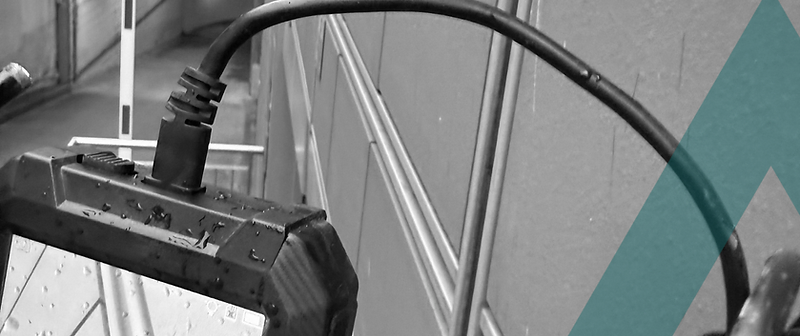
How endoscopic inspection reveals conditions inside cavities, voids and sealed construction without unnecessary opening-up.
Many building defects originate inside sealed or inaccessible construction: cavity walls, voids, roof build-ups, service ducts and behind fixed linings. Endoscope inspection allows these concealed areas to be examined directly through small access points, providing visual evidence of conditions that would otherwise require disruptive opening-up to assess.
A rigid or flexible endoscope is inserted through existing openings, service penetrations or small drilled access points, relaying a live image of the concealed construction. This can identify moisture tracking, debris accumulation, missing or damaged DPMs, insulation condition, fixing corrosion and the as-built arrangement of hidden details.
Used alongside moisture mapping and thermal imaging, endoscopic inspection helps build an evidence-led picture of the defect before any larger opening-up is recommended. It narrows the investigation area, reduces unnecessary disturbance and supports a clear, defensible diagnosis, a non-intrusive technique that often answers the question that opening-up would otherwise be needed to resolve.
For common concealed defect mechanisms and the indicators that can guide further investigation, see our latent defect technical reference.
Need an evidence-based investigation? Speak with our team →